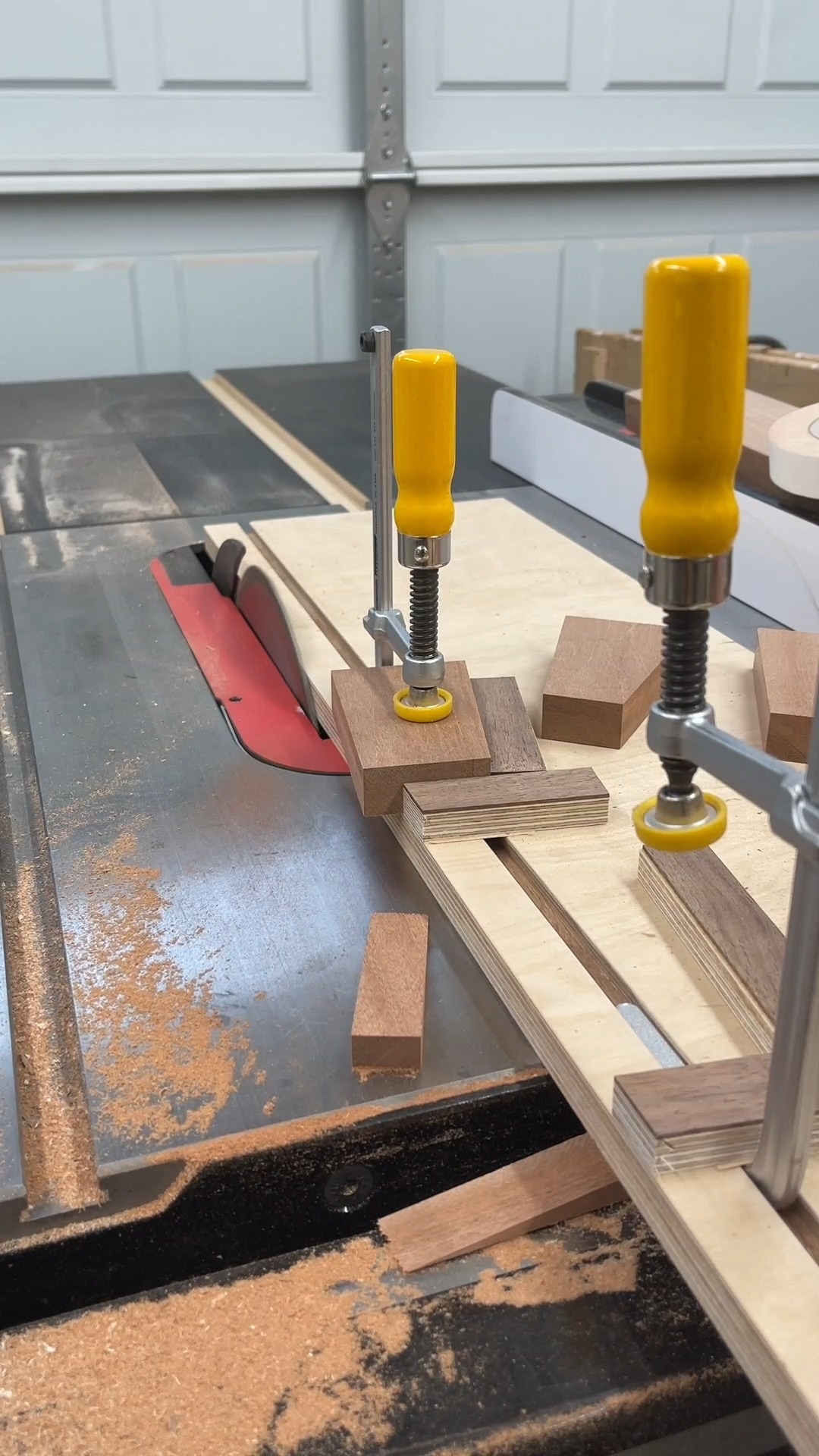
Made a straight-line ripping sled for my tablesaw--here's how I use it most often.
Search inside any video
SavedThat transcribes your saved videos and lets you search across all of them instantly. Save this video and find any moment.
TL;DR
Learn how to effectively use a straight-line ripping jig for precise cuts on various materials, including panels and veneer.
Chapters
- 0:00Introduction to the jig01
- 0:10Cutting smaller pieces02
- 0:30Cross cutting panels03
- 0:50Cutting veneer with stabilization04
- 1:10Creating templates for cuts05
- 1:20Conclusion and tips06
Transcript
Here are my most common uses for my straight line ripping jig. On smaller pieces, if you want to cut to a specific grain line that might be tapered to start out with, this works great. It gives you a fresh edge to then ride against the fence to cut out your actual piece. The next most common is any type of panel that I want to cross cut.
This is also why it doesn't run against the fence so that I can have a wider piece on there. I also use it a lot to cut veneer and I'll use a stabilizing board on top to stabilize the veneer for a clean cut. This also works. This is another panel cut on a previous sled that I had. It leaves a fresh edge on there.
but it's also just a great starting point for building your own jigs for an order of operations that might otherwise take quite a bit of time without something set up. So here I'm going to put tapers on both sides of these otherwise square pieces. So I double stick tape down the first
template and now I'm using those pencil marks to mark to exactly the point where it'll cut to make that second cut while also putting in a second piece to make that first cut. So here I can do as many pieces as I want, just cycling them through one piece getting cut that first time, the other piece getting cut that second time. It's just a very handy starting point for a lot of different
types of cuts. It's like having a track saw on your table saw, just a safe way to cut small pieces.
Are you the creator or rights holder of this video? Request removal of this transcript.
Related Transcripts
 1:26Instagram
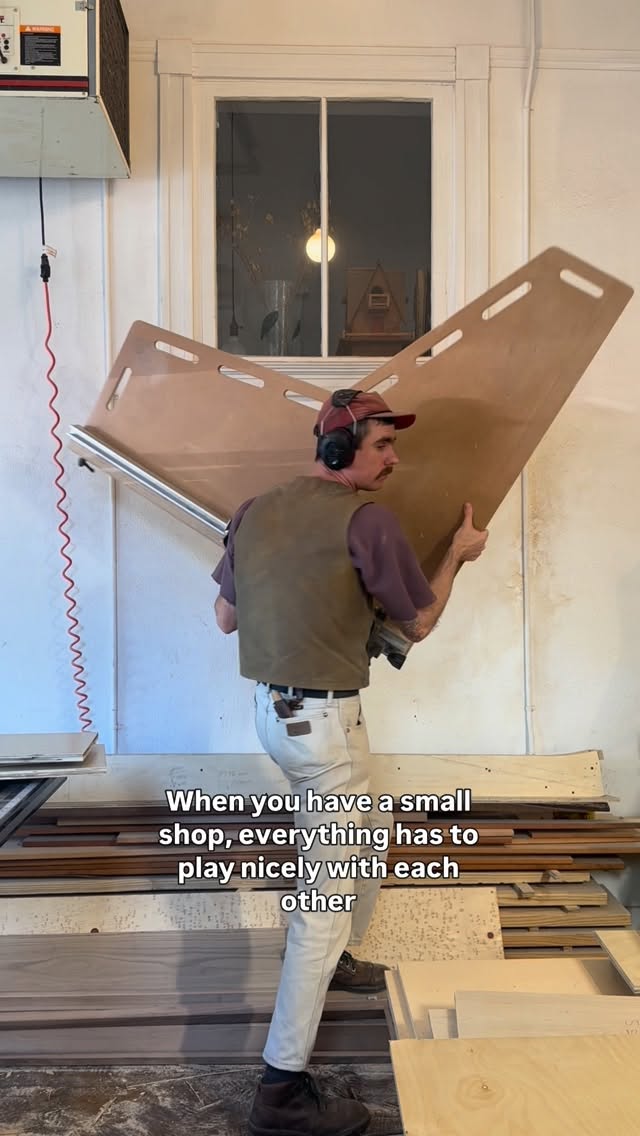
SHOP TALK: giant xcut sled #shopsystems #smallwoodshop #customcabinetry
Tupelo Studio
 0:58Instagram
260.
Robert Banana
 1:31Instagram
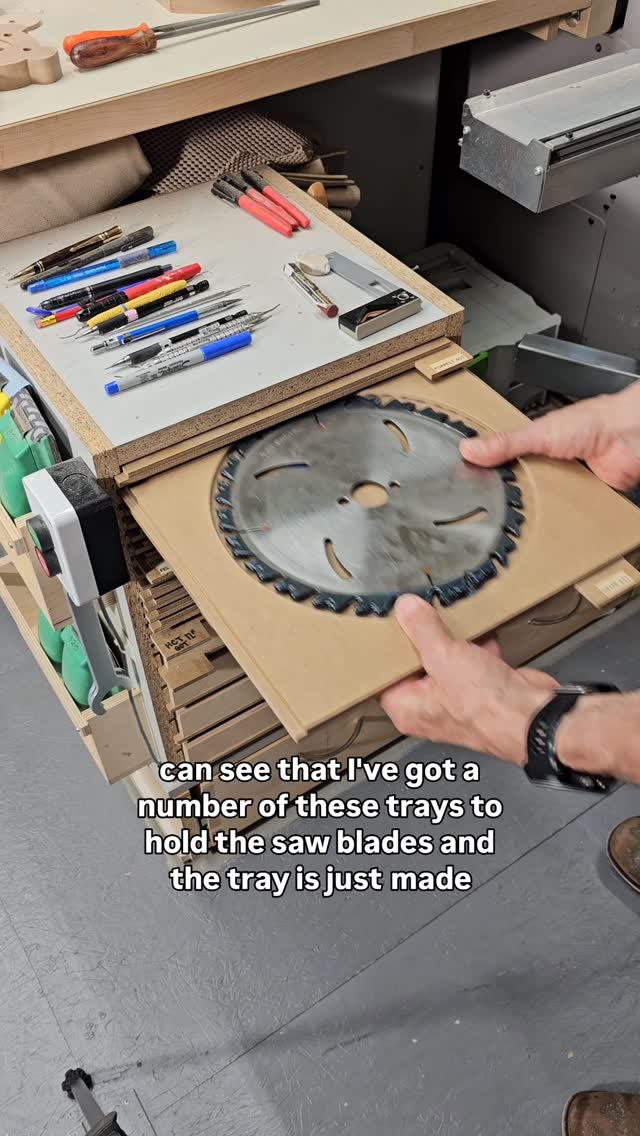
More storage solutions in my shop - this time it's my tablesaw blade storage.
David Bedrosian - Waterloo, ON
 0:55Instagram
I am very excited that I figured out how to build a miter saw station that can…
Thomas Gojkovich
 0:37Instagram
Где посмотреть подробный видео-урок?
Jenri Joinery
 1:16Instagram
How to store your tools.
Brian Carlson
Never lose a moment again
Save videos from YouTube, Instagram, and TikTok. Search everything that was said, and jump to the second.
Start Saving Videos - Free Trial