
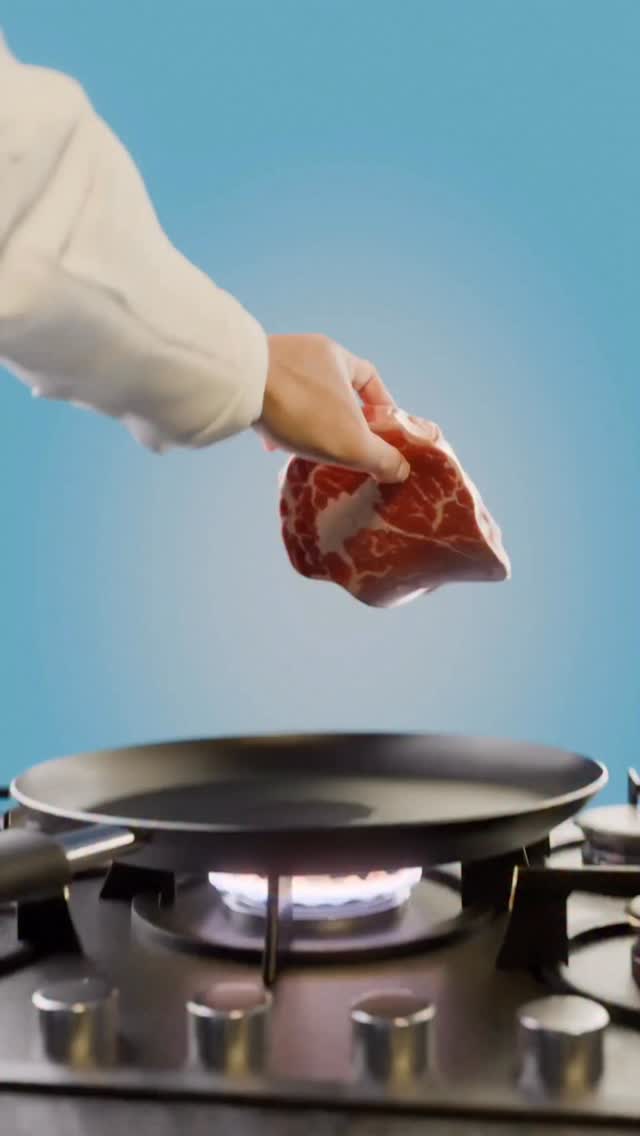
The way you salt your steak, depends entirely on the cut.
Search inside any video
SavedThat transcribes your saved videos and lets you search across all of them instantly. Save this video and find any moment.
TL;DR
Learn the best techniques for salting different cuts of steak to enhance flavor and achieve the perfect crust when cooking.
Chapters
- 0:00Introduction to Salting Steak01
- 0:10Understanding Steak Cuts02
- 0:30Salting Skirt and Flank Steaks03
- 0:50Salting Ribeye, Oyster Blade, and Sirloin04
- 1:20The Dry Brining Process05
- 1:30Choosing the Right Salt06
Transcript
A lot of people ask us when you should salt a steak before you cook it. Unfortunately, most people get that salting wrong. I've got five different steaks in front of me. Skirt, flank, sirloin, oyster blade and rib eye cutler. These two do not require salting in the same way as these three at the back. Skirt and flank come from a very similar part of the body on the inside of the hind quarter
and they should be cooked in a similar way. They both have long fibre length so they need to be cooked very fast and at the hottest temperature possible. They do benefit from marinating but not from salting. Now we've got the three cuts at the back and all these three will benefit from extended dry brining or salting. The ribeye cutlet, the oyster blade steak and the sirloin steak.
Somewhere between two and 24 hours. We will salt these, they will go into the fridge. Overnight what will happen is that it draws the moisture out and then it's reabsorbed. That's what gives you a more flavoursome steak at the other end. If you salt it for under two hours what's going to happen is that the moisture will be drawn to the surface of the meat by the salt but it hasn't had a chance to reabsorb it into the cell
structure of the meat so you're left with wetness on the surface which makes it very difficult to get a good crust when you come to cook it so you've salted any one of your steaks you've generously salted both sides and then it can go on to a tray a trivet like this anything that allows the air to circulate around the steak uncovered straight into the fridge make sure that you bring it out at least
an hour before you cook though because you want that meat at room temperature which salt do you use. We use an evaporated sea salt, this is called flossy salt, slightly coarser than a table salt. If you've only got table salt at home you can use that, just bear in mind that it's got more
surface area, you won't need quite as much of it. Comment salt below and we'll send you the guide to salting steaks so you can cook them at home.
Are you the creator or rights holder of this video? Request removal of this transcript.
Related Transcripts
 0:55Instagram
Welp #food
Jordan Howlett
 29:22YouTube
Molten Salts and Plasma Turn Cheap Iron Into Strong Steel
The Thought Emporium
 1:51:45YouTube
Угадай Настоящего Повара Мишлен ! 6 Человек Врут, 1 Говорит Правду! (Кореш, Парадеич, Фрама,Горилла)
ExileShow
 1:52YouTube Shorts
Cheesy chicken fajita pasta bake recipe review
Louis Howard
 1:32YouTube Shorts
😱 СЫТНЫЙ УЖИН НА ВСЮСЕМЬЮ ЗА 15 МИНУТ 😱 #рецепты #foodshorts #food #еда #chef
Шеф-Повар Дмитрий Новицкий 😋 (Dmitry Novicki)
 1:00YouTube Shorts
ЭТИ вина берет даже сомелье!
Вино без воды | Ароматный Мир
Never lose a moment again
Save videos from YouTube, Instagram, and TikTok. Search everything that was said, and jump to the second.
Start Saving Videos - Free Trial