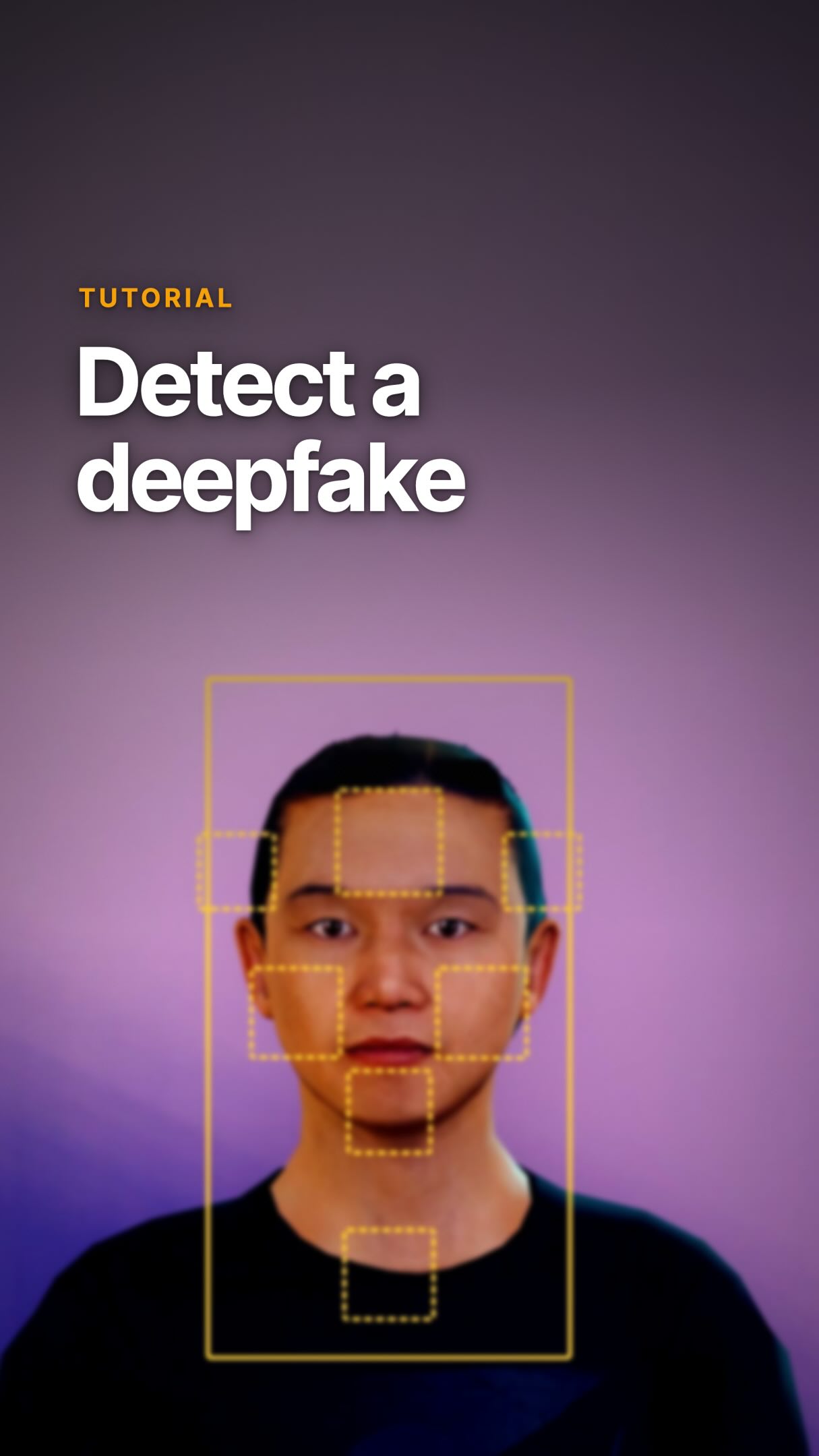
Comment “pulse” and I’ll send you a guide on how to build your it yourself for…
Search inside any video
SavedThat transcribes your saved videos and lets you search across all of them instantly. Save this video and find any moment.
TL;DR
Learn how Intel's deepfake detector uses subtle color changes in your face to identify fake videos by tracking your pulse.
Chapters
- 0:00Introduction to Deepfake Detection01
- 0:10How Heartbeat Affects Skin Color02
- 0:20Tracking Color Changes in Video03
- 0:30Filtering Out Noise04
- 0:40Matching Pulse Across Skin Patches05
- 0:50Intel's Accuracy in Testing06
- 1:00Building Your Own Detector07
Transcript
Your face changes color every time your heart beats. Your eyes can't see it, but a camera can, and you can use a tiny change in color to detect deepfake videos. Intel built a deepfake detector using this, so I looked into whether it works. Every time your heart beats, more blood flows through your face, causing tiny changes in how your skin reflects light. But how does a computer catch it, you may ask?
First, it finds your face and picks a few patches of skin, like your forehead and cheeks. A video is just a bunch of pictures, about 30 every second, and every pixel is three numbers, how red, green, and blue it is. So for each patch, it tracks how the green value changes from frame to frame, because that channel usually shows the pulse most clearly.
Line those numbers up, and you get a messy wave. Most of it is noise from things like lighting changes and movement. But the interesting thing is, your heart can only beat about 40-200 times a minute, so the computer filters out everything outside that range. And what's left is your pulse. On a real face, different parts of your skin show the same heartbeat. But a deepfake is generated by AI, not a heart, so those patches won't match.
And when Intel tested its system, it reported 96% accuracy. If you want to build your own deepfake detector to put on your resume, comment the word PULSE and I'll send you a full breakdown on how you can do this.
and I'll send you a full breakdown on how you can do this.
Are you the creator or rights holder of this video? Request removal of this transcript.
Related Transcripts
 0:42Instagram
Comment “skill” to get a link to it 👇 #ai @duncanrogoff
Tunde Alao
 1:04Instagram
comment "edit" and i’ll send the breakdown over👇 Day 4 of letting claude code…
Johannes Forseth | AI Systems
 0:53Instagram
Comment “muse” for the setup guide 👇 @rpn #ai
Tunde Alao
 0:58Instagram
How to make ultra realistic AI videos 😳 Comment “AI” for the entire workflow for free!
Rourke Sefton-Minns
 1:06Instagram
comment "Kallaway" and i’ll send the breakdown over 👇 Day 1 of recreating…
Johannes Forseth | AI Systems
 0:42Instagram
Comment AI for the link & guide to recreate these viral flash-cut edits,…
Jo Mendes
Never lose a moment again
Save videos from YouTube, Instagram, and TikTok. Search everything that was said, and jump to the second.
Start Saving Videos - Free Trial