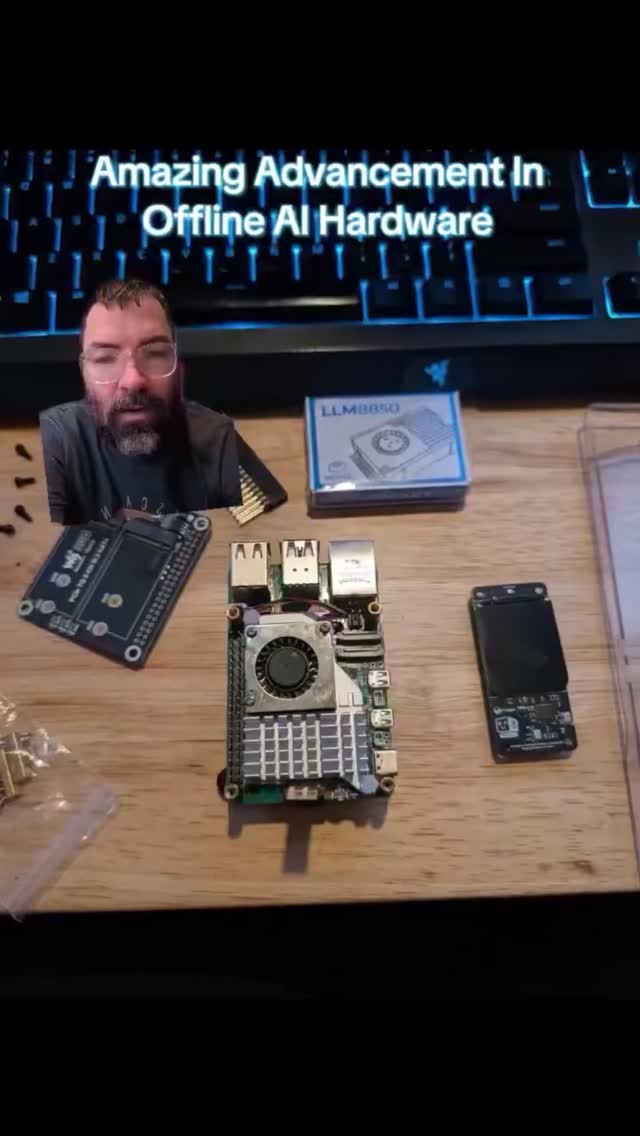
Amazing Advancement In Offline AI Hardware
Search inside any video
SavedThat transcribes your saved videos and lets you search across all of them instantly. Save this video and find any moment.
TL;DR
This video discusses an innovative offline AI hardware setup using a Raspberry Pi and a compact GPU, enabling real-time processing without cloud reliance.
Chapters
- 0:00Introduction to Offline AI Hardware01
- 0:20Overview of WispPlay Project02
- 0:40Introducing the LLM8850 GPU03
- 1:00Setup and Configuration Steps04
- 1:40Performance Benefits of the New GPU05
- 2:20Real-Time Applications and Use Cases06
- 2:40Conclusion and Future Prospects07
Transcript
So you've probably seen in the past that I was working on this project with the WispPlay where it's got like speed recognition It's running an LLM and then it's got voice synthesis So it's like listening to you running your question through an LLM and then talking the answer back to you using a Raspberry Pi all locally with this WispPlay hat This is one of the things that Leo Laporte and I talked about on his show
But there's this new thing that you can add to it, which is called the LLM8850 Which is a GPU the size of a quarter, okay? It's wild So the first thing you have to do is put this double M.2 hat on top of the Pi and it's got the PCIe cable. And then once you've got this all connected and set up, this is going to go on top of it.
But first, we're going to add the GPU here. The thing that's like so wild to me is that this little tiny GPU adds 24 trillion int 8 operations per second for just 7 watts of power. And it has an additional 8 gigs of RAM.
So you put it in that one, and then your screen and microphone and speaker can fit here. And again, this is the size of a quarter. This is a GPU the size of a quarter. So now the system has 16 gigs of RAM with a CPU.
They can already do all of this on its own. But you're adding an additional GPU here, the size of a quarter, with an additional 8 gigs of RAM and an additional 8 cores. And so the software for this project what they doing is they taking the speech model and the LLM model and before you had to load one run it unload it load the other one run it unload it
You have to go back and forth. And so that loading and unloading is the primary bottleneck for speed. But with this setup, you can just load one of them, the speech or the LLM, into the system memory and then the other one into this GPU, and they're both loaded and ready to go all the time and they don't ever have to unload, right?
So there's no memory bandwidth constraint there and it can talk to you in real time faster than ChatGPT can. So imagine you synchronize this with like your notes folder, right? And you have it like,
hey, take a note in my journal entry for today about this topic, whatever I'm thinking about. And it's like, okay, added it. And then it's automatically synchronized to your computer. It's in your Obsidian or whatever. You can be like, hey, help me come up with a plan for this thing,
Keep reading - 3 more segments
Sign in free to read the full transcript, save this video, and search inside everything you save.
Sign in to continue readingPrefer the original? Watch the video
Are you the creator or rights holder of this video? Request removal of this transcript.
Related Transcripts
 1:32Instagram
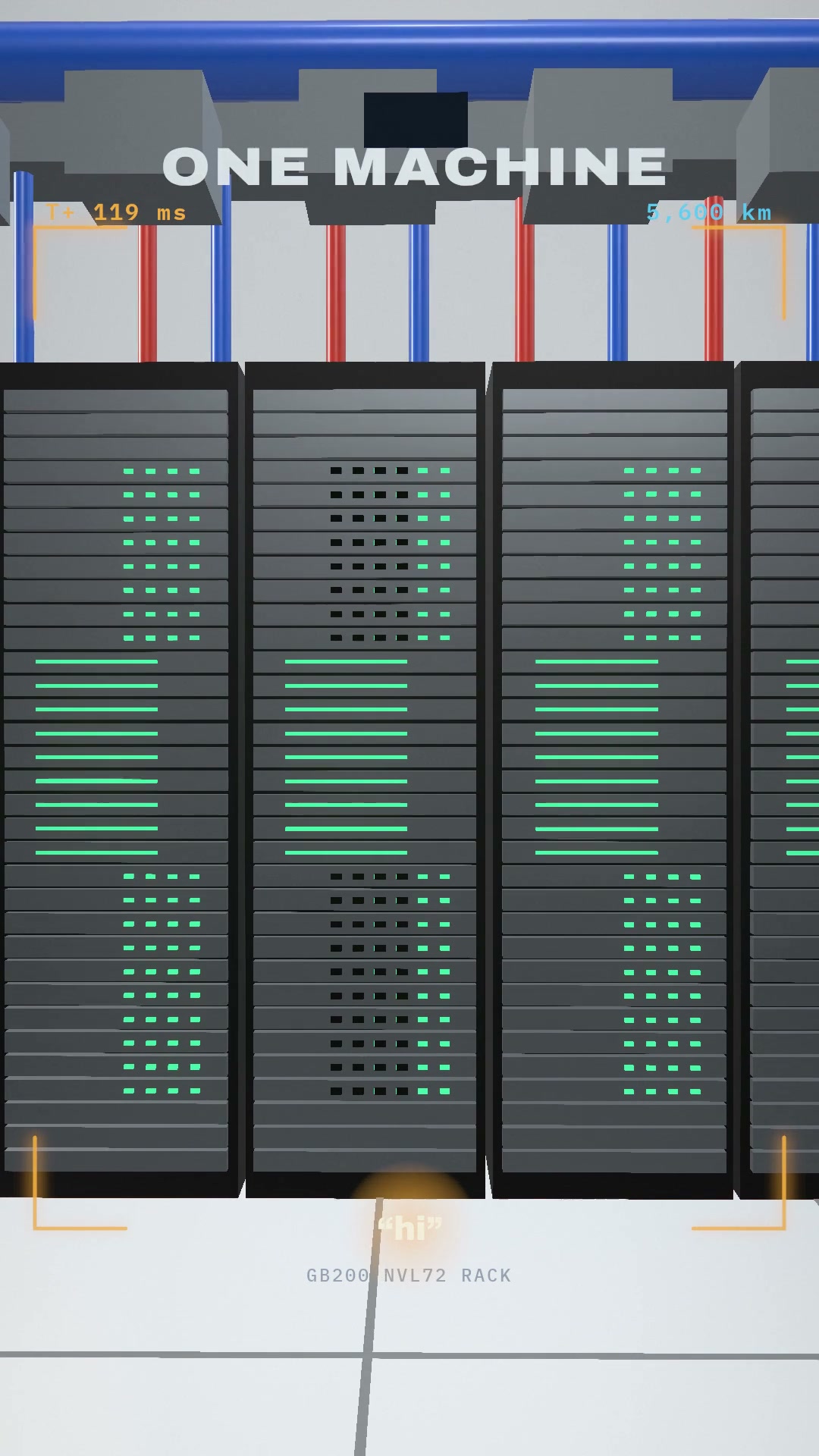
You type "hi" to an LLM.
AI Unpacked
 2:08Instagram
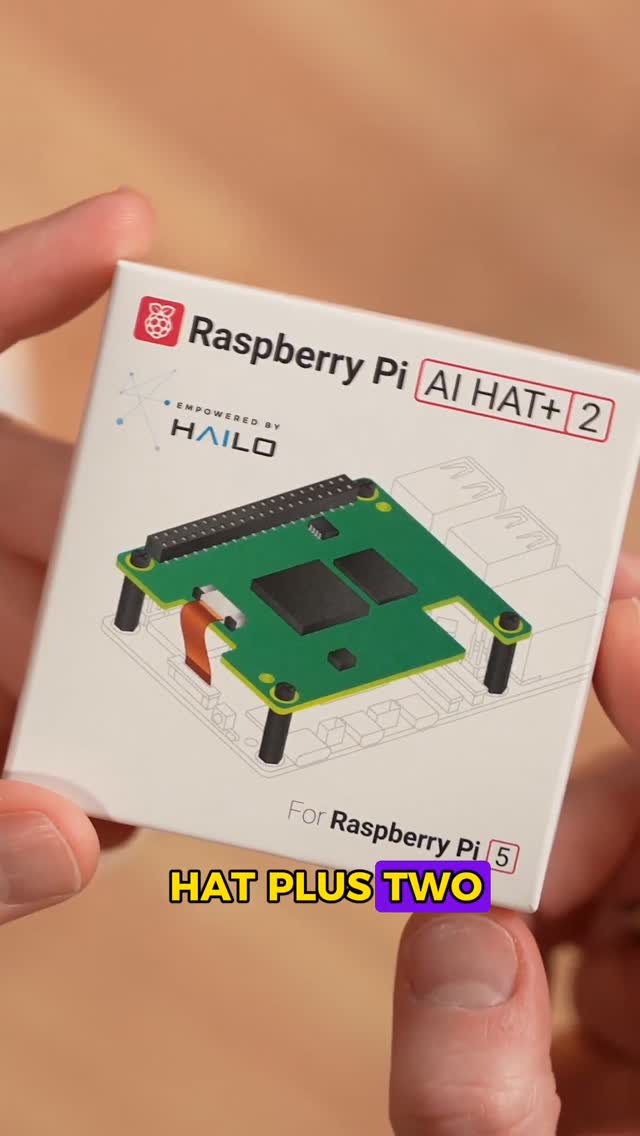
NEW Raspberry Pi AI Hat Is a Massive Upgrade @raspberrypi
NetworkChuck
 1:03Instagram
Per usual if you want these prompts comment “upgrade” and I’ll send em your way…
Angus the Nontechnical
 14:11YouTube
How I use AI to edit all my Short-form Videos (Hyperframes Setup & Prompts)
Softgirlnocode
 10:38YouTube
I Built an Entire Marketing Agency With 1 AI Tool!
Higgsfield AI
 2:21Instagram
Millions of minds came together to make this possible.
Charles Zheng
Never lose a moment again
Save videos from YouTube, Instagram, and TikTok. Search everything that was said, and jump to the second.
Start Saving Videos - Free Trial